UltraBright
Handheld
Red and near-infrared light therapy you can hold in one hand. How it works, how to use it, and where it fits in care.
Skin and surface tissue
Muscle, joint and nerve
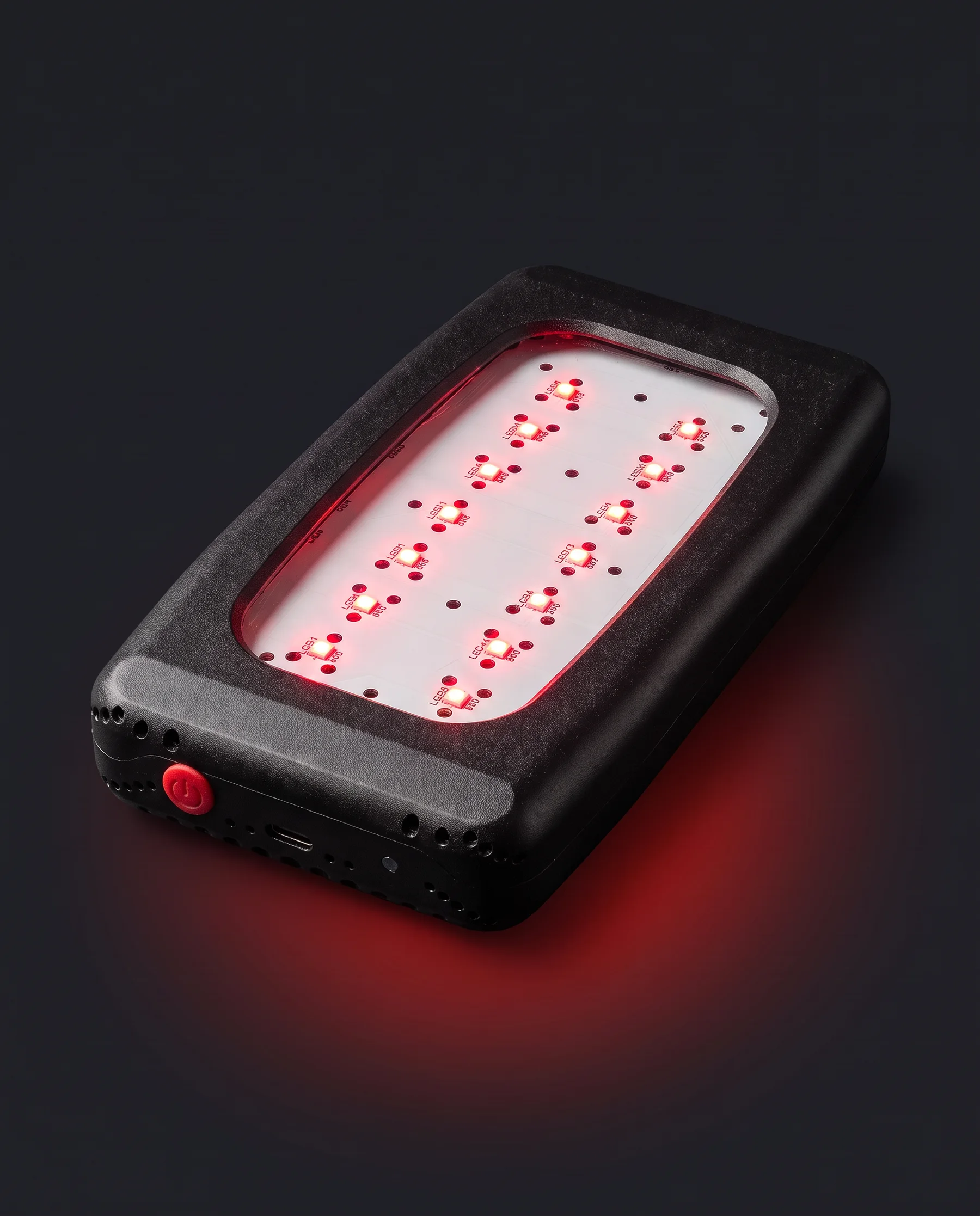
Two wavelengths, two depths
The UltraBright Handheld delivers two clinically studied wavelengths from one cordless unit. Here is what each one does and why the combination matters.
What is photobiomodulation?
Photobiomodulation, also called low-level light therapy or red light therapy, uses specific wavelengths of light to influence activity inside cells, without heat, needles or downtime. Red and near-infrared light is absorbed by cytochrome c oxidase in the mitochondria. That raises the cell’s production of ATP, its energy supply, which supports tissue repair, reduces inflammatory signalling, increases local nitric oxide release for better circulation and stimulates fibroblasts to make collagen. The effect is cumulative: most benefit comes from consistent, repeated sessions rather than any single one.
Skin and surface tissue, roughly 8 to 10 mm deep. Collagen and elastin, fibroblast activity, surface healing and scars, tone and texture, acne inflammation, surface circulation.
Deep tissue, roughly 3 to 5 cm: muscle, joint and nerve. Muscle and joint recovery, deep inflammation, nerve support, deep circulation, pain at the tissue level.
Because the device runs both together, one session can treat the surface concern and the structure underneath it at the same time. That is what separates a dual-wavelength clinical device from the single-wavelength beauty gadgets most patients have already tried.
What the research shows
Red and near-infrared light is one of the more extensively studied non-invasive modalities in aesthetic and musculoskeletal medicine. Independent reviews, including Cochrane analyses, have found meaningful pain relief in conditions such as knee osteoarthritis, neck pain and chronic musculoskeletal disorders. Dermatology studies support red light’s role in collagen density, fibroblast proliferation and wrinkle reduction. Near-infrared in the 808 to 850 nm range has shown nerve regeneration potential and pain reduction in peripheral neuropathy trials.
This device supports wellness and recovery within a clinic’s existing treatment protocols. It is not a stand-alone diagnostic or primary treatment for any medical condition.
Built for the spots other devices miss
The specifications for the unit you have been issued. Use this page for anything about timing, output or hardware.
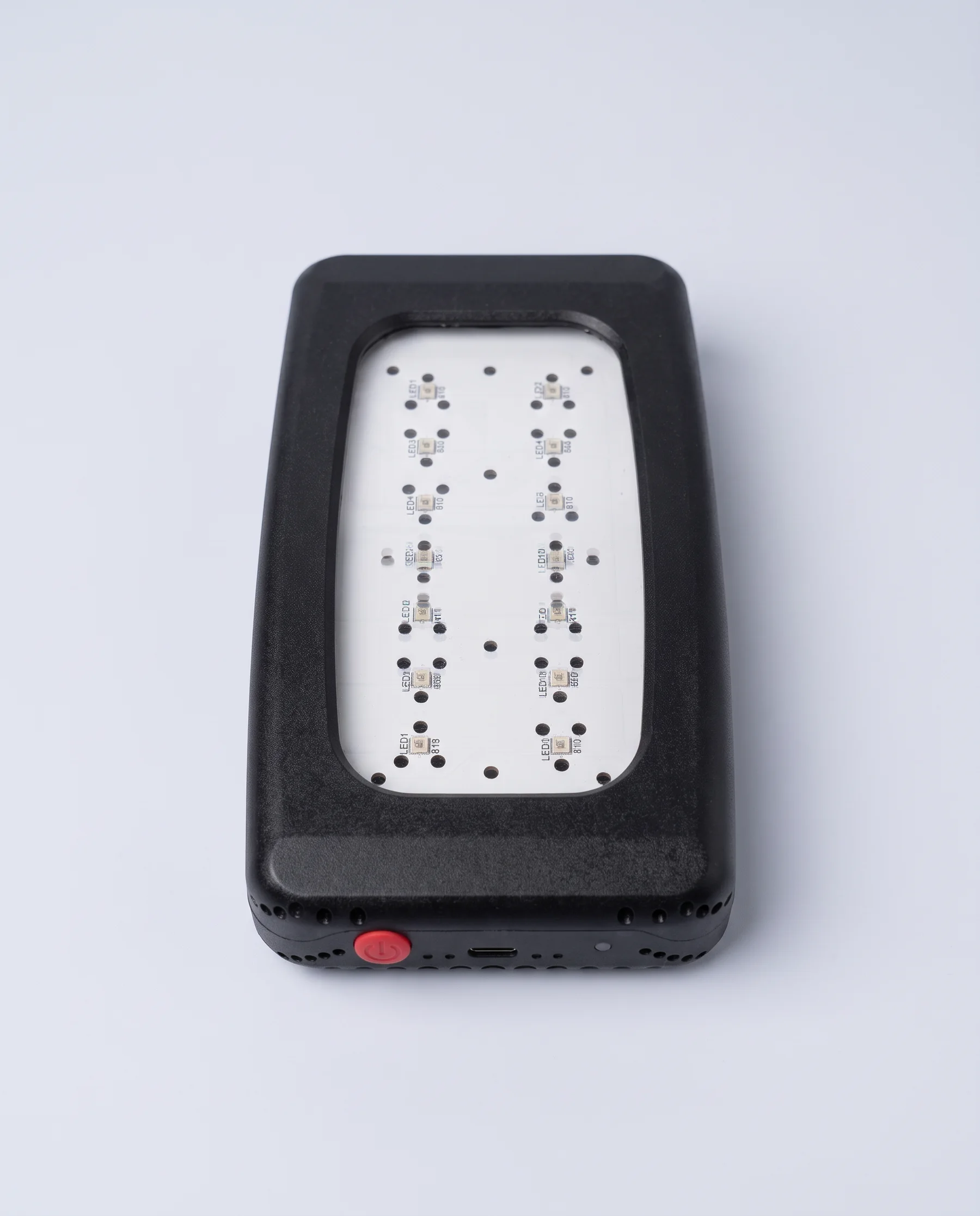
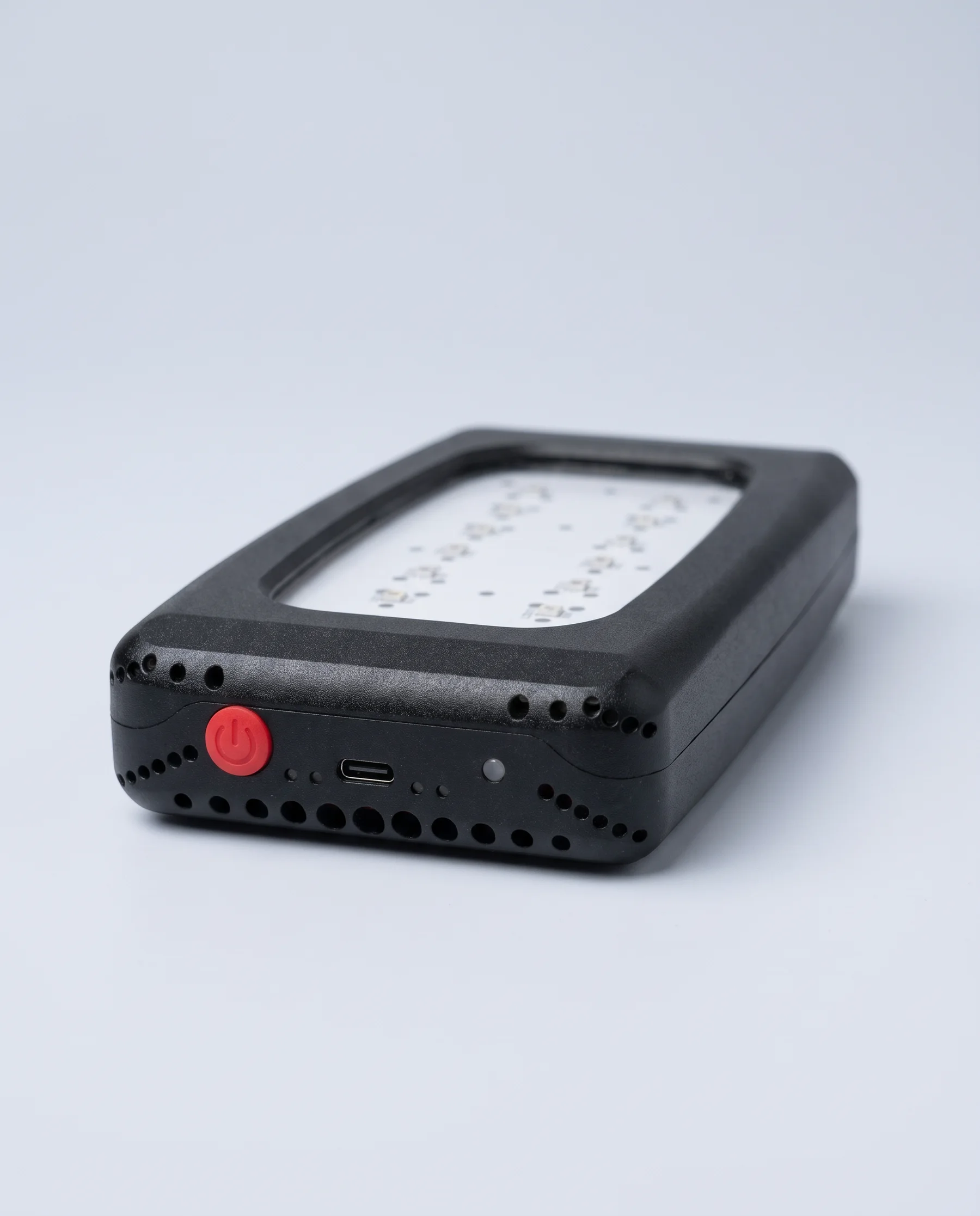
| LEDs | 6 red at 660 nm, 8 near-infrared at 810 nm |
|---|---|
| Irradiance | Up to 434 mW/cm² |
| Pulse | 10 Hz |
| Timer | Automatic 60-second cycle per area |
| Modes | Red and infrared, red only, infrared only, off |
| Battery | 10,000 mAh lithium, UN38.3 certified |
| Charging | USB-C, about 9 hours from empty |
| Operating | 10 to 40 °C |
| Storage | -5 to 55 °C |
| Design | Cordless handheld, single button |
Every session, step by step
The timing is built into the device and is part of the protocol, not a suggestion.
- 1Charge fully before first use
A full charge takes about 9 hours. Never use the device while it is plugged in.
- 2Prepare the skin
Clean and dry, free of lotion, sunscreen or makeup, which block light. Remove jewellery from the area.
- 3Choose the mode
Press the power button to step through the modes shown below. Match the mode to the goal.
- 4Place it flat on the skin
Hold the lens in full, direct contact with the area. Gaps between lens and skin reduce the light that reaches the tissue.
- 5Let the 60-second cycle run
The device times each area and stops on its own. Holding it longer does not make it stronger.
- 6Rest 30 to 60 seconds before repeating a spot
This cooling interval is part of the protocol. Extend it for sensitive or thin skin.
- 7Move to the next area
Repeat the cycle on each area. For larger areas such as the low back, thigh or shoulder, treat overlapping spots one after another.
- 8Watch the sensation
Mild warmth is normal. If it ever feels hot, painful or uncomfortable, stop and remove the device.
Choosing the mode
Surface and deep tissue together. The default for most concerns.
Skin, tone, collagen, acne and surface healing.
Muscle, joint, nerve and deeper inflammation.
The next press starts again at red and infrared.
One to three areas, about 5 to 15 minutes in total.
3 to 5 sessions a week for active concerns. 1 to 3 a week once results are reached.
Never shine it into the eyes. Use eyewear or keep eyes closed near the face.
Consistency beats intensity. Most patients notice results after 2 to 4 weeks of regular use and see the full effect at 8 to 12 weeks. Set that expectation at the start: this is a programme, not a one-off treatment.
Skin and aesthetics
Mostly the 660 nm red channel, with near-infrared added for scars and deeper recovery after procedures.
Joints, muscle and recovery
Mostly the 810 nm near-infrared channel, which reaches muscle, joint capsule, tendon and connective tissue.
Nerve health
Some of the strongest published evidence for near-infrared, and a direct fit with neuropathy programmes.
Wound care and skin integrity
Open wounds are for clinic use only. Any use over an open wound, ulcer or unhealed incision follows the clinic’s wound-care protocol under provider supervision. It is not a take-home use.
Circulation and whole-body wellness
Where it fits in your practice
Bundle a take-home unit into the treatment package or offer it at consult. It reinforces the in-clinic protocol every day the patient is not in the chair.
An adjunct for wound-margin support, scar management after closure and circulation in at-risk diabetic and vascular patients, always within the clinic’s wound-care framework.
A short session after PRP supports the healing response the injection started, and is a natural add-on to a regenerative visit.
An in-chair add-on during infusions for patients already focused on recovery.
The spot-treatment partner to the red light boots, belt and face mask: hands, elbows, jaw, scalp and small joints the larger devices do not reach.
A lower-cost, higher-margin add-on at checkout that keeps patients connected to the clinic between visits.
Contraindications and best practice
Red and near-infrared light has a strong safety record. It is non-ionising, unlike UV or X-ray, and does not damage DNA. Review the following with every patient before use.
Do not use without provider clearance
- Over a known or suspected malignancy, or any suspicious, undiagnosed skin lesion
- Directly into the eyes
- Over the abdomen or pelvis during pregnancy
- Directly over the thyroid
- Over an open wound, active infection or unhealed incision outside a supervised wound protocol
- Patients with photosensitive epilepsy
Use with caution and discuss with a provider
- Photosensitising medications, such as tetracyclines, fluoroquinolones, isotretinoin and other retinoids, amiodarone and some diuretics
- Lupus or other photosensitive autoimmune conditions
- Hyperthyroidism, when treating near the neck
- Pacemakers or other implanted cardiac devices
- Reduced sensation from neuropathy: rely on the timed cycle, not on what the patient feels
- Recent Botox (wait 2 weeks) or filler (wait 2 to 4 weeks)
Best practice
- Patch test new patients before a full protocol
- Never exceed the recommended time or frequency. More is not better.
- Stop and reassess if a patient reports burning, dizziness or worsening
- Mild redness or warmth that fades within an hour is normal
This device supports general wellness, recovery and adjunct care within a clinic’s treatment protocols. It is not intended to diagnose, treat, cure or prevent any disease, and statements in this guide have not been evaluated by the FDA. Review any medical claims made to patients against your scope of practice and state and federal advertising rules.
Keeping it working well
Getting the most from it
- Keep full contact. Even small gaps reduce the energy delivered.
- Match the mode to the goal. Red for skin, infrared for joints and nerves, both for mixed concerns.
- Respect the rest. 30 to 60 seconds between cycles on the same spot.
- Do not chase heat. Warmth is not the benefit. Burning means stop.
- Charge it properly. Full charge before first use. Do not leave it charging for long periods.
- Store it right. Dry, room temperature, out of direct sun. Recharge now and then in long storage.
- Keep it clean. A soft cloth with mild disinfectant. Never submerge it or use abrasive cleaners.
Shared use in clinic
- Wipe the lens and housing with a non-abrasive, alcohol-based disinfectant after every patient.
- Let it air dry fully before the next patient.
- Check the lens for residue or cracks before each use.
- Log use if you bill per treatment, so it can be tracked against packages.
- Store it charged in its case between uses.
Quick troubleshooting
| Will not turn on | Charge fully, then try again. |
|---|---|
| Feels too hot | Stop, allow the full rest interval, then resume with lighter contact. |
| Will not charge | Check the cable and connection. Use only the supplied charger. |
Two wavelengths. One device. Every service line you already run.
Order for your clinic at restoration-products.com · davidw@restoration-healthcare.com